India reports over 8.9 million osteoporosis-related fractures every year, with spine and hip fractures rising fastest after the age of 50. Studies show 1 in 3 Indian women and 1 in 5 Indian men face high fracture risk due to low bone density. Orthopaedic clinic in Ghaziabad, Uttar Pradesh, now see a steady increase in patients with back pain, height loss, and sudden fractures linked to osteoporosis.
Osteoporosis weakens bones from the inside. Bone density reduces gradually, which increases the risk of fractures even after minor falls or routine movements. Many adults in Ghaziabad remain unaware of bone loss until they require emergency orthopedic surgery for spine or hip fractures.
This guide explains causes, early and advanced symptoms, diagnosis, osteoporosis treatment and surgery options, costs, and orthopaedic clinic in Ghaziabad to help patients take action for bone health.
Causes of Osteoporosis in Adults in India
In India, studies show 1 in 3 women and 1 in 5 men above 50 years face high fracture risk due to low bone density. Urban areas in Uttar Pradesh report rising spine and hip fractures treated at orthopaedic clinics every year.
- Low Calcium Intake in Daily Diet: Indian diets often fail to meet the recommended 1,000–1,200 mg calcium per day for adults. Limited intake of milk, curd, paneer, and green vegetables reduces bone strength over time. Bones lose mineral density when the body lacks enough calcium for repair and maintenance.
- Vitamin D Deficiency Due to Limited Sun Exposure: Clinical data shows over 70% of Indian adults have vitamin D deficiency. Office-based work, indoor lifestyle, pollution, and sun avoidance reduce vitamin D production in the skin. Low vitamin D reduces calcium absorption, directly weakening bones in adults across Ghaziabad.
- Hormonal Changes After Age 40: Estrogen levels drop sharply after menopause in women. This change accelerates bone loss at a faster rate. Men also experience reduced testosterone with age, which lowers bone formation. Orthopedic specialists in Ghaziabad diagnose osteoporosis linked to age-related hormonal decline.
- Long-Term Steroid and Medical Drug Use: Regular use of corticosteroids for asthma, arthritis, or autoimmune conditions increases bone breakdown. Steroids reduce calcium absorption and suppress bone-building cells. Patients on long-term medicines require early osteoporosis treatment at orthopaedic clinics.
- Sedentary Lifestyle and Low Physical Activity: Bones grow stronger with weight-bearing activity. Desk jobs, limited walking, and minimal exercise reduce bone stimulation. Adults with inactive routines in Ghaziabad show faster bone density loss compared to physically active individuals.
- Smoking and Alcohol Consumption: Nicotine reduces blood supply to bones and slows bone healing. Alcohol interferes with calcium balance and hormone levels.
- Family History and Genetic Risk: People with parents who had hip or spine fractures face higher osteoporosis risk. Genetics influence peak bone mass achieved in early adulthood.
Early Symptoms of Osteoporosis in Adults in Uttar Pradhesh, India
Clinical data from Indian hospitals shows over 70% of osteoporosis cases remain undetected until the first fracture.
- No Pain During Initial Bone Loss: Bone density reduces gradually without triggering pain receptors. Adults continue daily activities while bones weaken internally.
- Gradual Loss of Height: Loss of 1–2 cm height over a few years signals compression in spinal vertebrae. Small collapses inside the spine reduce height slowly.
- Mild Back Discomfort After Routine Activity: Early vertebral weakness causes dull back discomfort after standing or walking for long hours. Pain intensity stays low and inconsistent.
- Reduced Grip Strength and Body Balance: Lower bone mass affects muscle coordination and joint stability. Adults experience weaker grip strength and balance issues while climbing stairs or lifting objects. Orthopaedic specialists use this sign to assess fracture risk.
- Easy Fatigue During Daily Tasks: Bone and muscle weakness increase energy demand. Patients report tiredness during routine household or office work. This symptom commonly appears in adults with low vitamin D and calcium levels.
- Slower Recovery After Minor Strain: Bones and supporting structures recover slower after small injuries. Delayed recovery signals reduced bone regeneration.
Early identification allows medical treatment to prevent fractures and surgery. Orthopedic specialists in Ghaziabad advise bone density testing for adults above 40 or with risk factors.
Advanced Symptoms of Osteoporosis in Indian Patients
Hospital records in India show osteoporotic fractures increase by over 30% after the age of 60.
- Sudden Severe Back Pain: Collapsed spinal vertebrae cause sharp and intense back pain without major injury. Simple actions like bending or coughing trigger pain. Orthopaedic specialists identify vertebral compression fractures as a common advanced symptom.
- Stooped Posture and Spine Deformity: Repeated vertebral fractures lead to forward bending of the spine. Patients develop a visible hunchback posture. This deformity reduces lung capacity and mobility.
- Hip Fractures After Minor Falls: Advanced osteoporosis weakens the hip joint structure. Minor slips or low-impact falls cause hip fractures. These fractures often require orthopedic surgery and long rehabilitation under specialist care.
- Noticeable Loss of Height: Multiple spinal collapses shorten the spine rapidly. Patients lose several centimeters of height within a short period. Clothing fit changes and posture imbalance become obvious signs.
- Difficulty Standing or Walking: Bone instability and pain limit movement. Patients struggle with standing for long periods or walking short distances. Orthopaedic surgeons in Ghaziabad link mobility loss directly to untreated osteoporosis.
- Nerve Compression Symptoms: Collapsed vertebrae press on spinal nerves. Patients experience leg pain, numbness, or weakness.
Osteoporosis Diagnosis by Orthopaedic Specialists in Ghaziabad
Clinical studies show bone mineral density drops by up to 10% in the first 5 years after menopause. Early diagnosis allows timely osteoporosis treatment and prevents fractures that lead to orthopedic surgery.
DEXA Scan for Bone Mineral Density
Orthopaedic clinics use DEXA scan as the gold standard for osteoporosis diagnosis. The scan measures bone density at the hip and spine. A T-score below –2.5 confirms osteoporosis. Doctors in Ghaziabad rely on DEXA results to plan treatment intensity.
FRAX Score for Fracture Risk
Orthopedic specialists calculate the FRAX score to estimate 10-year fracture risk. The tool combines age, weight, height, previous fractures, and lifestyle factors. High FRAX scores guide doctors toward aggressive osteoporosis treatment.
Blood Tests for Bone Health
Doctors order blood tests to assess:
- Calcium levels
- Vitamin D levels
- Thyroid and parathyroid function
Low vitamin D and calcium levels explain bone weakness in many adults visiting orthopaedic clinics in Ghaziabad.
X-Rays to Detect Silent Fractures
Spine X-rays reveal vertebral compression fractures. Many patients show fractures without prior severe pain.
Clinical Evaluation by Orthopedic Specialist
Doctors assess posture, height loss, walking pattern, and muscle strength. Family history and medication use guide risk assessment.
Osteoporosis Treatment without Surgery in Ghaziabad
Indian medical data shows early treatment reduces fracture risk by up to 50% in osteoporosis patients. Orthopaedic specialists in Ghaziabad focus on non-surgical treatment first to strengthen bones and prevent fractures.
- Calcium and Vitamin D Supplementation: Adults require 1,000–1,200 mg calcium daily for bone maintenance. Doctors prescribe calcium with vitamin D to improve absorption. Blood test results guide dosage. Orthopaedic clinics in Ghaziabad monitor levels regularly to maintain bone strength.
- Anti-Resorptive Medicines: These medicines slow bone breakdown. Common drug groups include:
- Bisphosphonates
- RANKL inhibitors
Orthopedic specialists prescribe these drugs to increase bone density and reduce spine and hip fracture risk. Do not take these on your own without consultation.
- Bone-Forming Medicines: Anabolic medications stimulate new bone formation. Doctors use them in patients with very low bone density or previous fractures. These medicines help rebuild bone structure before surgery becomes necessary.
- Diet Plan for Strong Bones: Orthopaedic specialists advise diets rich in:
- Milk, curd, paneer
- Green leafy vegetables
- Almonds and sesame seeds
- Protein-rich foods
- Weight-Bearing and Strength Exercises: Controlled exercises increase bone mass and muscle support. Walking, stair climbing, and resistance training strengthen bones.
- Fall Prevention Measures at Home: Doctors advise practical steps:
- Anti-slip flooring
- Proper lighting
- Handrails in bathrooms
- Supportive footwear
Fall prevention plays a critical role in avoiding fractures and emergency orthopedic surgery.
- Regular Monitoring by Orthopaedic Specialist: Follow-up visits track bone density improvement and medication response. Orthopedic specialists adjust treatment based on progress and risk profile.
When Osteoporosis Surgery in Ghaziabad Becomes Necessary?
Hospital data shows over 60% of osteoporotic fractures require surgery evaluation to restore mobility and reduce pain. Orthopaedic specialists in Ghaziabad recommend osteoporosis surgery when medical treatment fails to control fracture risk or symptoms.
Orthopedic Surgery Options for Osteoporosis in Ghaziabad
Indian orthopedic data shows surgery restores mobility in over 80% of osteoporotic fracture patients. Orthopaedic surgeons in Ghaziabad use procedure-specific approaches based on fracture location, pain severity, and bone stability.
Vertebroplasty and Kyphoplasty in Ghaziabad
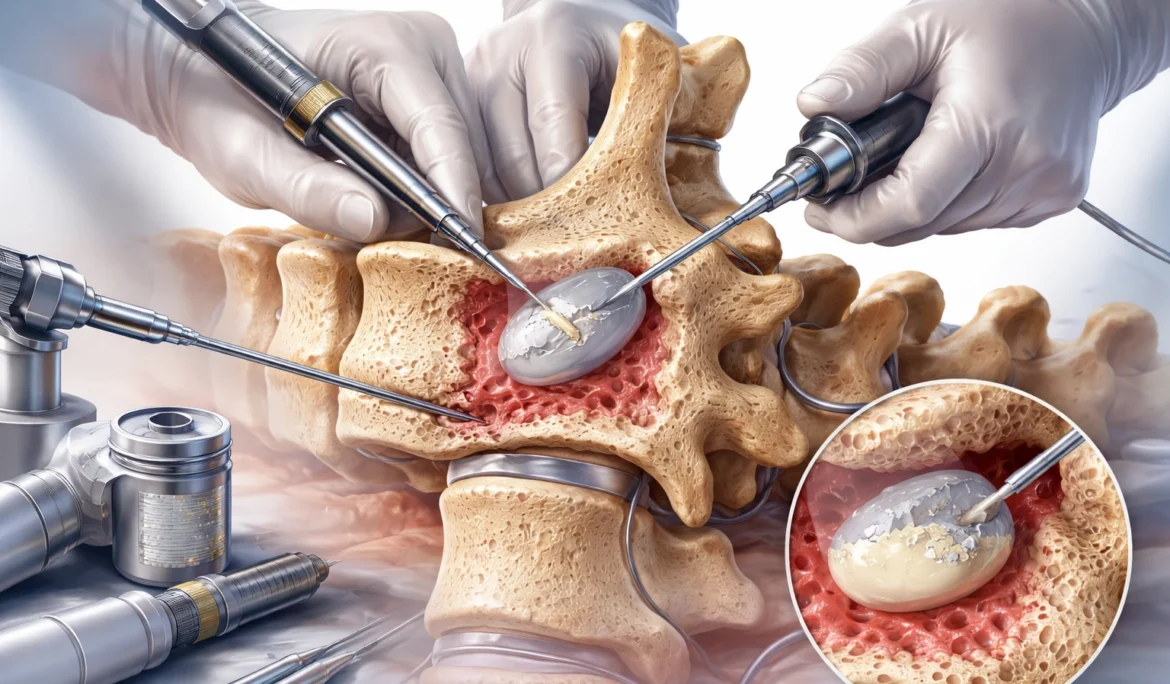
These procedures treat vertebral compression fractures caused by osteoporosis.
Vertebroplasty
- Doctors inject medical-grade bone cement into the collapsed vertebra.
- The cement stabilizes the bone and reduces pain within days.
- The procedure uses minimally invasive techniques with short hospital stay.
Kyphoplasty
- Surgeons insert a balloon into the vertebra before cement injection.
- The balloon restores spinal height and corrects deformity.
- Kyphoplasty reduces pain and improves posture in elderly patients.
Hip and Joint Replacement Surgery for Osteoporosis
Hip fractures remain one of the most serious complications of osteoporosis.
- Surgeons replace damaged bone with artificial joint components.
- It restores walking ability and joint stability.
- Early surgery reduces complications like blood clots and muscle wasting.
Spine Stabilization and Fusion Surgery
Severe osteoporosis causes spinal collapse and instability.
- Surgeons use rods, screws, or cages to stabilize the spine.
- Fusion surgery prevents further collapse and nerve compression.
- Surgery improves posture and reduces long-term pain.
Post-Surgery Rehabilitation and Recovery
- Physiotherapy starts early to restore strength and balance.
- Pain control supports faster mobilization.
- Regular follow-ups monitor bone healing and implant stability.
Orthopedic surgery combined with rehabilitation improves long-term outcomes in osteoporosis patients.
Orthopaedic Clinic and Specialist Selection in Ghaziabad
Healthcare data shows treatment outcomes improve by over 40% when osteoporosis care is handled by experienced orthopaedic specialists.
Dr MS Bajaj is one such orthopaedic specialist in Ghaziabad UP, with regular exposure to osteoporosis cases manage bone quality challenges better. His experience in spine and hip fractures deliver safer outcomes for elderly patients.
His clinic is a reliable orthopaedic clinic in Ghaziabad offers:
- On-site DEXA scan access
- Digital X-ray and MRI facilities
- Laboratory testing for calcium and vitamin D
Osteoporosis Treatment and Surgery Cost in Ghaziabad
Healthcare pricing data from Uttar Pradesh shows osteoporosis treatment costs vary widely based on disease severity and treatment type. Orthopaedic clinics in Ghaziabad provide both medical and surgical care with cost differences linked to procedure complexity and hospital facilities.
Cost of Osteoporosis Diagnosis in Ghaziabad
Initial evaluation includes:
- Orthopaedic consultation
- DEXA scan
- Blood tests for calcium and vitamin D
Diagnostic costs generally range from ₹3,000 to ₹15,000, depending on clinic and test availability.
Monthly Cost of Non-Surgical Osteoporosis Treatment
Medical treatment includes supplements and prescription medicines.
- Calcium and vitamin D supplements cost ₹500–₹3,500 per month
- Advanced bone-strengthening medicines cost ₹3,000–₹10,000 per month
Doctors adjust treatment based on bone density response and fracture risk.
Cost of Osteoporosis Surgery in Ghaziabad
Surgical costs depend on fracture type and implant use.
- Vertebroplasty or kyphoplasty: ₹90,000 – ₹2,80,000
- Hip fracture surgery or joint replacement: ₹1,80,000 – ₹5,70,000
- Spine stabilization or fusion surgery: ₹3,60,000 – ₹8,00,000
Costs vary based on hospital stay, implant quality, and post-surgery care.
Factors Affecting Final Treatment Cost
- Age and overall health of patient
- Severity of bone loss
- Type of implant used
- Length of hospital stay
- Rehabilitation requirements
FAQs on Osteoporosis Treatment and Surgery in Ghaziabad
Which doctor treats osteoporosis in Ghaziabad?
An orthopaedic specialist treats osteoporosis. Doctors with experience in bone density disorders, spine care, and fracture management provide diagnosis, medical treatment, and surgery when required.
At what age should osteoporosis testing start?
Doctors advise bone density testing after 40 years, especially for women, people with back pain, long-term steroid use, or family history of fractures.
Can osteoporosis be treated without surgery?
Yes. Most patients manage osteoporosis through medicines, supplements, diet, and exercise. Orthopedic surgery becomes necessary only after fractures or when medical treatment fails to control bone loss.
Is osteoporosis surgery safe for elderly patients?
Modern orthopedic surgery uses minimally invasive techniques. Procedures like vertebroplasty and joint replacement show high success rates in elderly patients when performed by experienced orthopaedic surgeons in Ghaziabad.
Orthopaedic Care for Osteoporosis in Ghaziabad
Bone fractures reduce mobility and independence. Early osteoporosis treatment prevents surgery and long-term complications. Consult Dr MS Bajaj, an orthopaedic specialist in Ghaziabad for bone density testing, medical care, and advanced orthopedic surgery options.